5 Most Common Types of Roof Storm Damage (& What to Do Next)
Severe weather can strike with little warning, leaving homeowners with more than just cleanup to worry about. High winds, hail, heavy rain, and flying debris can all wreak havoc on your home’s most critical protective layer—the roof. Understanding how roof storm damage occurs, what to look for, and what to do next can save you from costly repairs down the road.
If you suspect your roof has taken a hit after a storm, it’s smart to schedule a professional inspection right away. Learn more about how our roofing services help homeowners identify, repair, and prevent storm-related roof problems before they escalate.
In this guide, you’ll learn:
- The most common types of storm-related roof damage
- What signs to look for after severe weather
- How to respond safely and effectively
- Tips for filing insurance claims and working with contractors
- Ways to prevent future storm damage to your roof
Why Roof Storm Damage Deserves Immediate Attention

When a major storm passes through, the damage may not always be visible from the ground. Even minor issues can quickly turn into expensive repairs if ignored. Roof storm damage can compromise not only your shingles but also the structural integrity of your entire home.
Here’s why addressing storm damage quickly is so important:
- Protects Your Investment: Your roof is one of the largest investments in your home, and neglecting repairs can shorten its lifespan.
- Prevents Hidden Leaks: Water can find its way under damaged shingles and cause interior leaks that lead to mold or rot.
- Avoids Costly Structural Damage: Small punctures or missing shingles can expose your decking and attic to water infiltration.
- Supports Insurance Claims: Prompt inspection and documentation make it easier to file and process claims.
- Restores Peace of Mind: Knowing your home is safe and secure helps you move forward after a stressful storm.
Homeowners in Chesterton and surrounding areas often experience fast-changing weather, which makes post-storm roof checks a necessary part of home maintenance.
5 Most Common Types of Roof Storm Damage (and How to Recognize Them)
Storms can affect different roofing systems in different ways. Identifying the type of damage early helps determine whether repairs or full replacement are needed. Below are the most common issues homeowners face after a storm.
1. Wind Damage
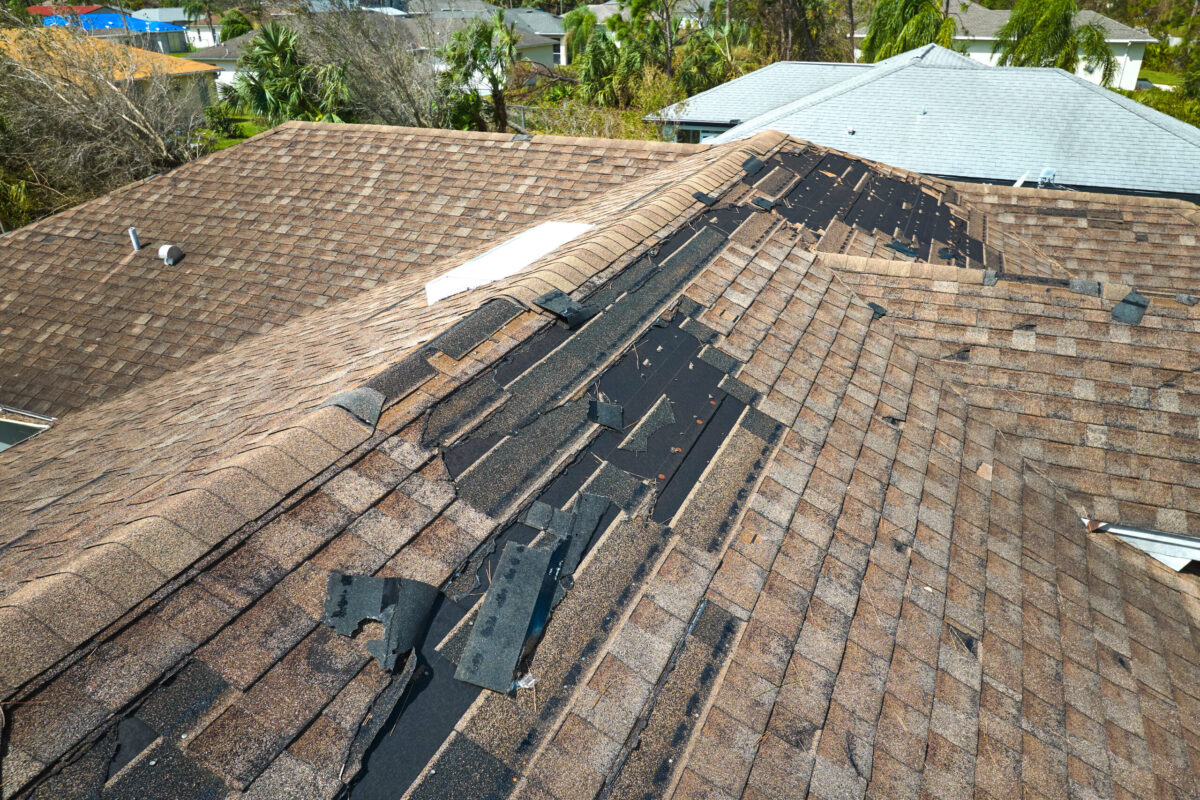
Strong winds can lift, crease, or completely tear shingles from your roof, leaving underlayment exposed to rain and sunlight. Asphalt shingles, especially older ones, are most vulnerable to this kind of damage.
Look for:
- Missing or displaced shingles
- Shingles that appear curled or lifted at the edges
- Debris caught under shingle tabs
If left unaddressed, these openings can let in moisture and cause leaks over time. Professional roofers can secure or replace damaged shingles before water intrusion becomes an issue.
2. Hail Damage
Hailstorms can leave behind small but significant dents on your shingles, flashing, and gutters. The impact can knock off the protective granules that shield shingles from UV damage.
Signs of hail impact include:
- Round, dark spots or bruises on shingles
- Dented metal flashing, vents, or gutters
- Excessive granules in gutters or downspouts
Although hail marks may look cosmetic, the loss of granules accelerates shingle aging and can void manufacturer warranties if not repaired promptly.
3. Water Damage
Heavy rain, especially when combined with high winds, can drive water into vulnerable spots on your roof. This often leads to slow leaks that go unnoticed until they cause interior damage.
Watch for:
- Ceiling stains or bubbling paint indoors
- Damp attic insulation or musty smells
- Discoloration or sagging roof decking
Addressing water damage early prevents mold growth and structural decay, both of which are expensive to fix later.
4. Impact Damage from Debris
During intense storms, tree limbs and airborne debris can puncture or crack roofing materials. Even small branches can scrape off granules or loosen flashing.
Common indicators include:
- Visible dents or punctures on the roof surface
- Broken shingles or displaced flashing
- Debris lodged in gutters or valleys
If you notice debris on your roof after a storm, avoid climbing up yourself. A qualified roofing contractor can inspect the area safely and determine the extent of the damage.
5. Ice Dams and Snow Damage
In colder climates, snow and ice accumulation can lead to ice dams—thick ridges of ice that trap melting snow on your roof. This trapped water can seep under shingles and refreeze, damaging the structure over time.
Warning signs:
- Icicles hanging from gutters
- Water stains near exterior walls
- Uneven melting patterns on the roof
Proper attic insulation and ventilation help prevent ice dams by keeping roof temperatures consistent.
What to Do Right After a Storm

Knowing what to do immediately after severe weather can help minimize damage and ensure safety. Here’s a step-by-step approach every homeowner should follow.
Step 1: Stay Safe and Assess from the Ground
Your safety comes first. Avoid climbing onto your roof to inspect damage. Instead, use binoculars from the ground to look for missing shingles, sagging sections, or debris buildup.
You can also:
- Walk around your property and take photos of visible damage
- Check your attic for leaks or moisture
- Look for fallen branches or broken gutters
If you suspect major issues, contact a professional roofer right away.
Step 2: Document All Visible Damage
Documentation is key for insurance claims. Take clear, dated photos of the damage from multiple angles. If possible, capture both wide shots and close-ups.
Keep a written log of what you observe, including the time of the storm, wind speed estimates, and any immediate repairs you perform (like covering leaks with tarps).
Step 3: Contact a Roofing Professional
Before filing a claim, schedule a detailed roof inspection. Roofing professionals know how to identify subtle damage that homeowners may miss. Their inspection report serves as valuable evidence for insurance adjusters.
For residents in Chesterton and surrounding areas, having a local roofing expert ensures familiarity with weather-related patterns and building codes.
Step 4: File an Insurance Claim
Once you have inspection results and photos, contact your insurance provider to start the claims process. Provide all documentation and keep records of conversations and claim reference numbers.
Tips for smoother claims:
- Review your homeowner’s policy to understand coverage limits
- Ask about your deductible before approving repairs
- Avoid signing with contractors who promise “free roofs” before your claim is approved
A reputable roofing company can help you navigate insurance procedures and coordinate directly with adjusters.
Step 5: Schedule Repairs or Replacement Promptly
Once your claim is approved, don’t delay scheduling repairs. Waiting too long can lead to secondary damage that might not be covered later.
Choose a roofing contractor who provides high-quality materials, clear communication, and proof of insurance. A properly repaired roof not only restores safety but also enhances long-term performance and curb appeal.
Preventing Future Storm Damage
While you can’t control the weather, there are steps you can take to reduce the likelihood of major roof issues in the future. Preventive maintenance extends the life of your roofing system and helps it withstand severe conditions more effectively.
Routine Inspections
Have your roof inspected at least once a year, ideally before storm season. A professional can identify loose shingles, weakened flashing, or clogged gutters before they lead to leaks.
Proper Ventilation and Insulation
Balanced attic ventilation prevents heat and moisture buildup, which can weaken shingles and encourage ice dams. Well-insulated attics also help regulate roof temperature during storms.
Gutter Maintenance
Clogged gutters prevent proper drainage and cause water to pool along your roofline. Clean your gutters regularly to ensure smooth water flow during heavy rain.
Tree Trimming
Keep branches at least six feet away from your roof to prevent them from scraping shingles or falling during storms. This simple maintenance step greatly reduces the risk of impact damage.
Use of Quality Materials
If your roof needs replacement, invest in high-performance shingles and proper underlayment. Modern materials are designed to resist wind uplift and water penetration, providing stronger protection against storm damage.
Comparing Repair vs Replacement After Storm Damage

Not all storm damage requires a full roof replacement. Understanding when repair is enough—and when replacement makes more sense—helps you make the most cost-effective decision.
| Situation | Repair Recommended | Replacement Recommended |
| Minor wind or hail damage | ✔ | |
| Isolated missing shingles | ✔ | |
| Aging roof near end of lifespan | ✔ | |
| Widespread shingle loss or structural damage | ✔ | |
| Multiple leaks or rotting decking | ✔ | |
| Visible sagging or compromised structure | ✔ |
A trusted roofing contractor can provide a detailed inspection report and estimate, helping you choose the right path based on your roof’s age, condition, and material type.
Homeowners in Chesterton and surrounding areas often find that prompt, professional evaluation helps them avoid unnecessary expenses and ensures insurance coverage remains valid.
Protect Your Home with a Reliable Roofing Team
Storms can be unpredictable, but your response doesn’t have to be. Recognizing the signs of roof damage, acting quickly, and working with a trusted professional can make all the difference in restoring your home safely and efficiently.
If you suspect your roof has sustained storm damage or want to schedule a preventive inspection in Chesterton and surrounding areas, contact us today for expert support. Our experienced team will inspect your roof, explain your options clearly, and ensure your home is ready for the next storm that comes its way.