Roof Granule Loss: 8 Clues Your Shingles Are Failing
If you’ve started noticing roof granule loss, it may be one of the earliest warning signs that your shingles are beginning to fail. These small mineral particles play a major role in protecting your asphalt roof from sun exposure, moisture, and physical damage. When loose granules begin to accumulate or disappear, your roof becomes more vulnerable to leaks, aging, and costly repairs. Understanding what to look for can help you take action before minor wear turns into major structural issues.
Here’s what this guide covers:
- Common causes of roof granule loss
- Key warning signs your shingles are failing
- How to inspect and maintain your roof
- When to contact a roofing professional
- Ways to extend the life of your roofing system
Why Roof Granule Loss Should Never Be Ignored

Roof granules are essential to the performance of asphalt shingles and the durability of your overall roofing system. They form a protective outer layer that shields the asphalt layer beneath from UV exposure, harsh weather, and daily wear. While a few granules coming loose over time is considered normal aging, excessive granule loss is a sign your roof may be deteriorating faster than expected.
In Valparaiso, IN, changing seasons, snow, and storms can accelerate this process, especially on older roofs or poorly ventilated systems. Addressing significant granule loss early helps prevent leaks, improves fire resistance, and extends the life of your roof installation.
- UV protection: Granules shield shingles from sun damage that causes cracking.
- Water resistance: Helps prevent moisture from soaking into roofing materials.
- Impact defense: Reduces damage from hail and debris.
- Curb appeal: Maintains the color and smooth appearance of your roof.
- Longevity: Protects the asphalt layer and slows down overall wear.
Roof granules are essential to the performance of asphalt shingles. They act as a protective shield against UV exposure, heavy rain, and debris impact. Once granules begin to disappear, shingles deteriorate much faster — and weather is often the culprit. Hail is estimated to be responsible for 50% to 80% of all annual severe storm damages in the U.S. — and even small hailstones can dislodge enough granules to significantly accelerate shingle deterioration over time.
8 Signs Your Shingles Are Failing Due to Granule Loss
Catching these signs early can help you avoid major repairs and protect your home’s structure. Each of these clues points to ongoing wear that may require professional attention.
1. Granules Collecting in Gutters
One of the most obvious signs of roof granule loss is finding loose granules collecting in your gutters or downspouts. While a few granules are expected over time, excessive buildup indicates a problem.
- Seasonal buildup: Check gutters after storms or heavy rain.
- Visible sediment: Thick layers suggest significant granule loss.
- Early warning: Often the first sign your asphalt shingles are breaking down.
2. Bald Spots on Shingles
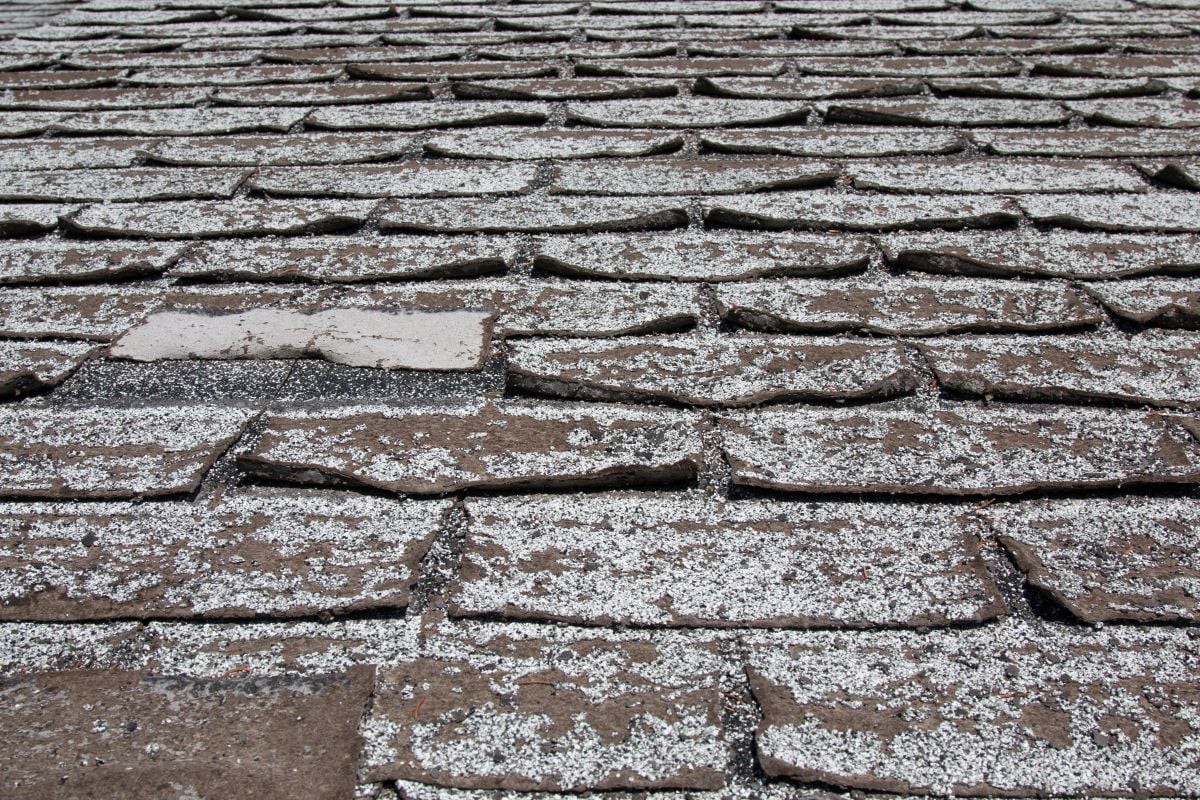
When granules wear off completely, they expose the asphalt layer beneath. These bald spots reduce protection and accelerate deterioration.
- Uneven surface: Patchy areas across the roof.
- UV exposure: Direct sunlight weakens the material quickly.
- Shortened lifespan: Leads to faster roof failure.
3. Curling or Cracking Shingles
As granules disappear, shingles lose flexibility and begin to crack or curl. This damage allows water to penetrate your roofing system.
- Edge curling: Indicates heat and aging damage.
- Surface cracks: Create entry points for moisture.
- Leak potential: Increases risk of interior damage.
4. Dark Streaks or Algae Growth
Granule loss can make shingles more prone to moisture retention, which often leads to algae growth and staining.
- Black streaks: Common on aging asphalt shingles.
- Moisture issues: Damaged shingles hold water longer.
- Surface breakdown: Indicates protective coating is failing.
5. Roof Age Over 15 to 20 Years
Even high-quality shingles experience normal aging, and granule loss becomes more noticeable over time. Older roofs are especially prone to excessive granule loss.
- Material fatigue: Asphalt shingles lose strength with age.
- Frequent issues: Repairs become more common.
- Replacement timing: Helps avoid unexpected failures.
6. Missing or Loose Shingles

Granule loss weakens shingles, making them more likely to detach during storms or high winds.
- Storm damage: High winds can remove compromised shingles.
- Exposed decking: Leaves your roof vulnerable to water intrusion.
- Urgent concern: Requires immediate inspection to prevent costly repairs.
7. Interior Signs of Roof Damage
As shingles deteriorate, water can enter your home and cause visible interior damage.
- Ceiling stains: Indicate leaks from above.
- Peeling paint: Caused by moisture buildup.
- Mold presence: Signals long-term water exposure.
8. Increasing Energy Costs
A failing roof can impact your home’s energy efficiency. Without proper protection, heat transfer increases significantly.
- Heat gain: Warmer attic temperatures in summer.
- Heat loss: Reduced insulation in colder months.
- System strain: Higher energy bills due to inefficiency.
How to Maintain Your Roof and Reduce Granule Loss
Preventative maintenance plays a key role in extending the life of your asphalt roof and avoiding premature replacement. Taking a proactive approach helps minimize damage and maintain performance.
Routine Roof Inspections
Regular inspections help identify early signs of wear before they escalate into serious issues.
- Visual checks: Look for bald spots, curling shingles, and discoloration.
- Gutter inspection: Monitor loose granules after storms.
- Seasonal reviews: Inspect at least twice per year.
Keep Gutters and Roof Clean
Debris buildup can trap moisture and accelerate granule loss. Keeping your roof clean supports proper drainage and prevents damage.
- Remove debris: Clear leaves and branches regularly.
- Maintain gutters: Ensure water flows away from your roof.
- Prevent buildup: Reduces long-term wear on shingles.
Address Repairs Quickly
Small issues can quickly turn into larger problems if left untreated. Prompt repairs protect your roof and prevent structural damage.
- Replace damaged shingles: Prevents further deterioration.
- Seal vulnerable areas: Protect flashing and joints.
- Professional support: Ensures long-term results.
When to Call a Roofing Professional

Knowing when to bring in an expert can save you time and money. A professional can evaluate your roof and determine whether repair or replacement is the best solution.
- Excessive granule loss: Large areas of wear across the roof
- Recurring issues: Frequent leaks or repeated repairs
- Storm damage: Missing shingles after severe weather
- Aging roof: Systems nearing the end of their lifespan
- Unclear condition: When a full inspection is needed
Protect Your Roof With Armour Construction
Roof granule loss is a clear signal that your shingles may be failing, and addressing it early can prevent major damage to your home. Armour Construction provides expert inspections, repairs, and full roof replacements to keep your home protected year-round. We’re proud to serve home and business owners in Valparaiso, IN, and nearby communities with roofing solutions designed for durability and long-term performance.
If you’ve noticed signs of roof granule loss, contact Armour Construction today to schedule your free inspection and ensure your roof stays strong for years to come.