
Commercial Roof Maintenance Checklist: 10 Essential Tasks
A commercial roof protects everything beneath it, from inventory and equipment to employees and tenants, yet it is easy to forget until a leak shows up. A reliable commercial roof maintenance checklist helps property owners catch small issues early, control repair costs, and avoid disruptions to the business. Whether you manage a warehouse, retail center, or office building, a consistent routine keeps your investment performing and makes it easier to plan long term for the roof protecting your property.
In this guide, you will learn:
- Why routine maintenance matters for commercial buildings
- Ten essential tasks to include in your maintenance plan
- How to organize upkeep by season
- Which problems to watch for on different roof types
- When to bring in a professional roofing team
Why Commercial Roof Maintenance Matters

Commercial roofs work hard. They deal with sun, wind, rain, snow, foot traffic, and rooftop equipment, and they are often large, flat or low slope, and slow to drain. Small problems tend to hide until water finds its way inside, which means proactive care is far cheaper than emergency repairs.
Many owners only think about the roof after a leak damages inventory or forces a section of the building to close. A written maintenance plan flips that pattern, replacing surprises with a predictable schedule that your team can follow every year.
Property owners in Dyer and surrounding areas deal with freeze and thaw cycles, summer storms, and heavy winter loads, all of which put steady stress on a roofing system. Here is what a consistent maintenance plan delivers:
- Lower Repair Costs: Catching a small seam failure or clogged drain early prevents expensive interior and structural damage.
- Longer Roof Life: Regular care helps the roofing membrane and components reach or exceed their expected lifespan.
- Warranty Protection: Many manufacturer warranties expect documented maintenance, so skipping it can put coverage at risk.
- Business Continuity: Avoiding leaks means fewer interruptions, closed areas, or damaged inventory.
- Better Budget Planning: Inspection records make it easier to forecast repairs and plan for replacement.
Ten Essential Tasks For Your Commercial Roof Maintenance Checklist
The tasks below cover the areas where commercial roofs most often develop trouble. Some can be handled by facility staff, while others are best left to experienced roofers who can safely work on the roof surface.
1. Schedule Professional Inspections Twice A Year
A trained roofer can spot issues that are easy to miss from the ground, such as early seam separation, membrane wear, or damaged flashing. Most commercial roofs benefit from an inspection in spring and again in fall, plus an extra visit after major storms.
- Spring inspections catch winter damage
- Fall inspections prepare the roof for cold weather
- Post storm checks identify hail, wind, or debris damage quickly
2. Clear Debris From The Roof Surface
Leaves, branches, trash, and loose materials trap moisture and can block drainage. Regular clearing keeps water moving and prevents the buildup that leads to ponding and membrane deterioration.
- Remove debris from corners, edges, and around equipment
- Watch for items that could puncture the membrane
- Be careful when walking the roof to avoid causing damage
3. Clean Drains, Scuppers, And Gutters
Drainage is the lifeline of a low slope roof. When drains and scuppers clog, water sits on the surface and puts weight and moisture stress on the roofing system.
- Clear drain strainers and internal drains
- Check scuppers and downspouts for blockages
- Confirm water flows freely after rain
4. Inspect Seams, Flashing, And Sealants
Seams and flashing are the most common leak points on a commercial roof. Look for lifted edges, cracked sealant, gaps, or flashing that has pulled away from walls and curbs.
- Check perimeter and parapet flashing
- Inspect seams for separation or bubbling
- Reseal or repair small defects before they spread
5. Look For Ponding Water
Water that sits for more than a day or two after rain can signal a drainage or structural issue. Ponding adds weight, accelerates membrane wear, and encourages algae and debris buildup.
- Note where water collects after storms and photograph it
- Check whether drains are clear before assuming a slope problem
- Ask a roofer to evaluate recurring ponding in the same spot
6. Check The Roof Membrane For Damage
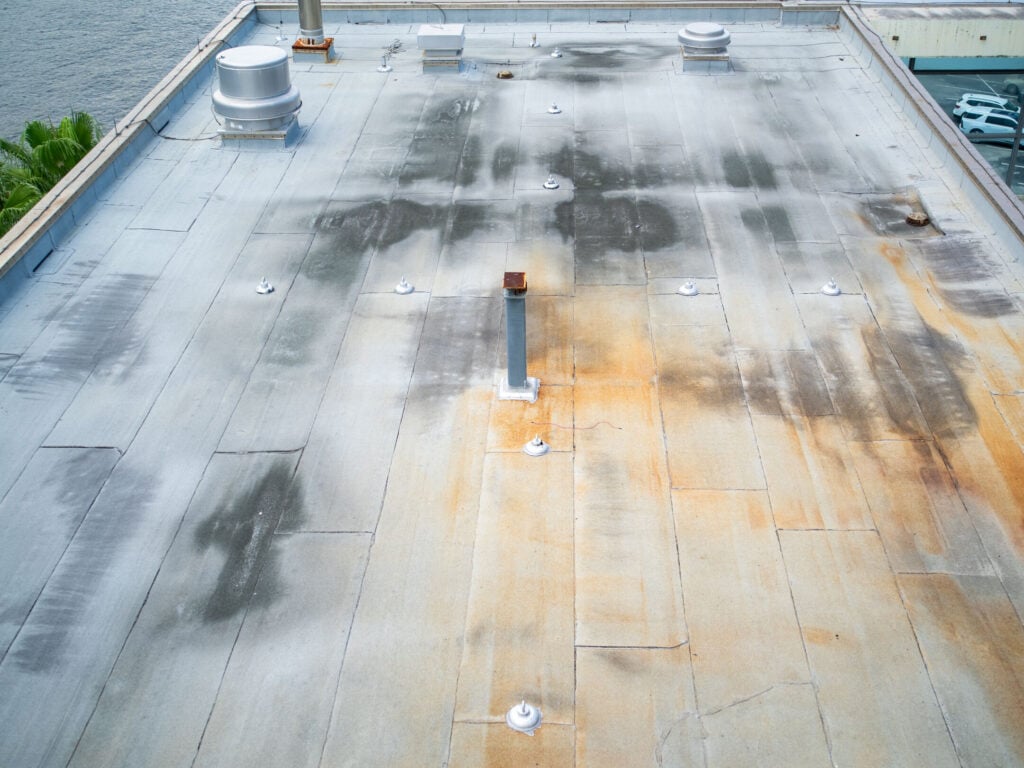
Walk the surface and look for blisters, cracks, tears, punctures, shrinking, or worn spots. The warning signs vary by material, but any change in condition deserves attention.
- Mark suspicious areas for professional review
- Note any areas of heavy wear near walkways or equipment
- Photograph problem spots to track changes over time
7. Inspect Rooftop Equipment And Penetrations
HVAC units, vents, pipes, and skylights create openings and traffic that can damage the roof. Make sure curbs, flashings, and seals around these penetrations are intact, and that technicians are not causing damage while servicing equipment.
- Confirm penetration seals are watertight
- Add walk pads where foot traffic is frequent
- Check for leaking condensate or fluids
8. Trim Overhanging Trees And Vegetation
Branches can scrape the roof surface, drop debris, and clog drains. Keeping trees trimmed back reduces damage and cuts down on cleaning. Falling limbs during storms can also puncture the membrane, so trimming is a simple way to lower risk.
- Keep branches several feet away from the roof edge
- Remove dead limbs that could fall during storms
- Clear leaf buildup in corners and drains after trimming
9. Check The Interior For Leak Signs
Stained ceiling tiles, damp insulation, musty odors, or peeling paint can signal a roof leak long before water drips. Interior checks are a quick way to catch problems early.
- Look for stains after heavy rain
- Check around penetrations and perimeter walls
- Report changes right away so repairs start sooner
10. Document Everything And Keep Records
Keep a log of inspections, repairs, photos, and invoices. Strong records support warranty claims, help track recurring issues, and make budgeting easier.
- Date and photograph each inspection
- Record repairs and who performed them
- Store warranty paperwork in an easy to find location
Seasonal Roof Maintenance Schedule
Breaking maintenance into seasonal tasks keeps the work manageable and ensures nothing is overlooked. Property owners in Dyer and surrounding areas often build this into their regular facility calendar.
Spring
Inspect for winter damage, clear debris, clean drains, and look for seam or flashing problems caused by freezing and thawing. This is also a good time to review the roof’s overall condition and plan for repairs.
Summer
Check for heat related wear, monitor ponding after storms, and inspect areas affected by rooftop equipment or foot traffic. Summer storms can also cause sudden damage, so a quick check after severe weather is smart.
Fall
Clear leaves and debris, clean drains and gutters, and schedule a full professional inspection before winter. Repairs completed now keep small issues from becoming winter emergencies.
Winter
Monitor for snow and ice buildup, watch drainage during thaws, and check interior areas for leak signs. Avoid chipping ice or shoveling snow aggressively, since tools can damage the membrane.
Common Commercial Roof Types And What To Watch For
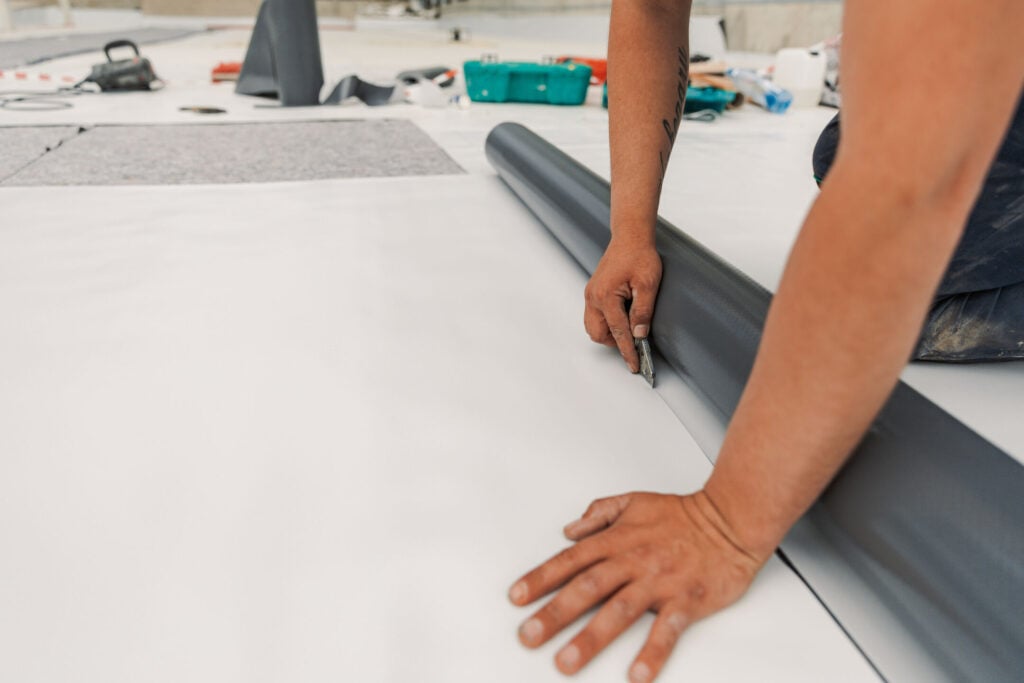
Different roofing materials age and fail in different ways. Property owners in Dyer and surrounding areas benefit from knowing what their specific roof is most likely to need, so here is a quick comparison.
| Roof Type | Common Issues | Inspection Focus |
| TPO | Seam separation, punctures, UV wear | Heat welded seams and flashing |
| EPDM | Shrinkage, tears, seam adhesive failure | Seams, edges, and penetrations |
| PVC | Punctures, seam stress, flashing issues | Welded seams and perimeter details |
| Modified Bitumen | Blistering, cracking, granule loss | Surface condition and laps |
| Metal | Loose fasteners, sealant wear, corrosion | Fasteners, panel seams, and sealants |
When To Call A Professional
- Active Leaks: Water entering the building needs prompt attention.
- Widespread Damage: Large areas of blistering, cracking, or wear call for a professional assessment.
- After Severe Weather: Hail, high winds, or heavy snow can cause hidden damage.
- Recurring Problems: Repeated repairs in the same area may point to a bigger issue.
- Roof Age: Older roofs benefit from expert evaluation to plan repair or replacement.
Keep Your Commercial Roof Performing Year After Year
A consistent maintenance routine is one of the most cost effective ways to protect a commercial building, and it is far easier to start now than to react after damage appears. With regular inspections, clear drainage, and good records, small issues stay small and the roof can deliver reliable service for years to come.
Armour Construction has helped property owners across Dyer and surrounding areas protect their commercial roofs with careful inspections, honest assessments, and quality repairs. We give you a clear picture of your roof’s condition with no hidden fees and no pressure to upgrade. If you want a trusted team to review your roof or build a maintenance plan, contact us today and let the Armour Construction team help keep your property protected.